Look at the top of this page: something is moving :). Every post on this blog now has a small simulation running in its header, and the home page borrows the one from its newest post.
There are five of them, and each one is built on a single small idea. This article goes through all five, with a toy version of each that you can play with.
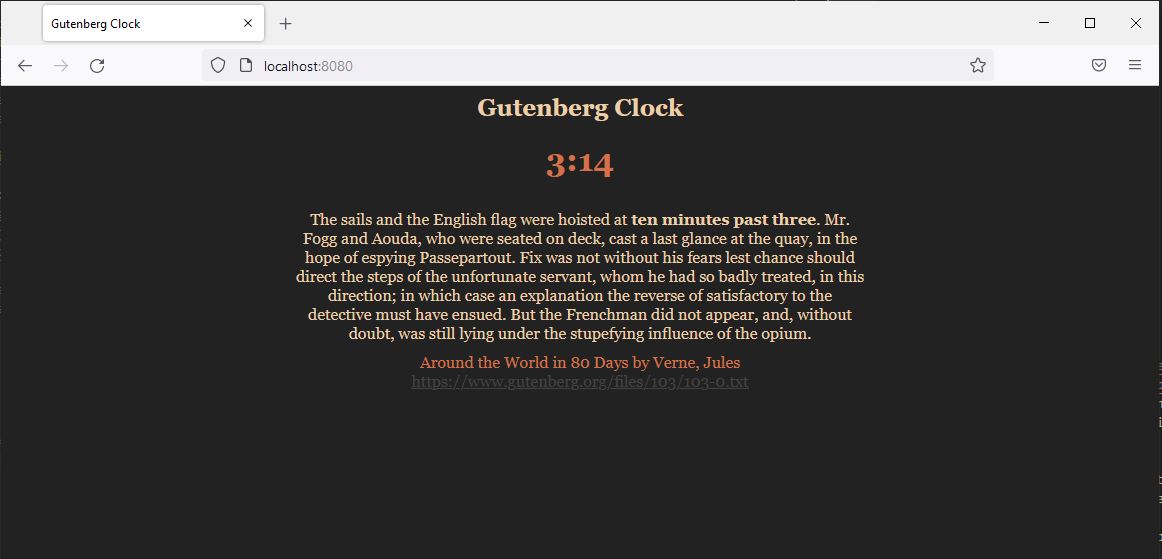
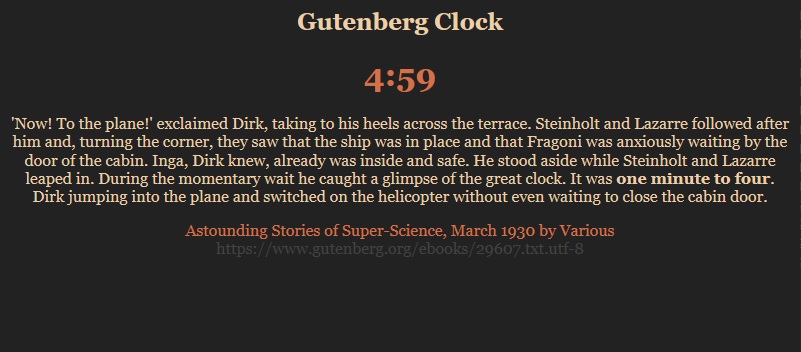
We use the previously created literary clock database to create a blazingly fast web service.
You can get the full code here but remember that you also need the lit_clock.db file generated here
A couple of years passed since i wrote GutenbergPy. It has since gained some traction. A few people contacted me for information, wanting to help, and using it in their projects. I won’t say it’s famous; in fact, it has gained little traction in terms of people using it versus time since launch; however, it is a niche project, and for what it did, I consider it a minor success (there already existed one library with a better name that did almost the same things but slower with more resource consumption and less maintained).
Hey! I paused writing on my blog for some time now, as a lot of other things came up.
This article is a small one that just introduces a new library/framework I have released called GeneBench